

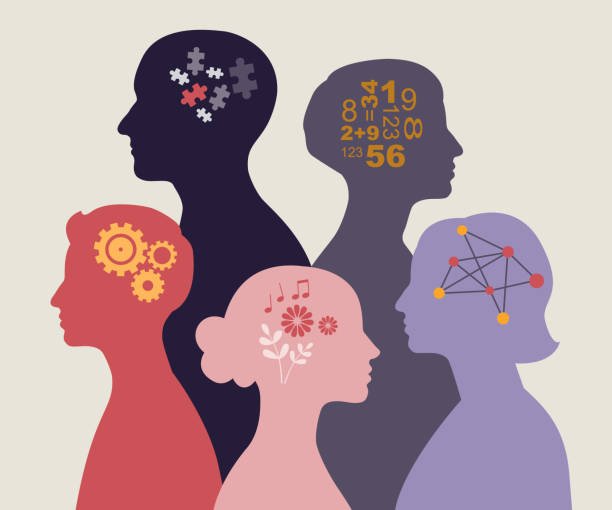
Personality is a unique and enduring internal and external aspect of an individual’s
character expressed in a unique way for each of us and reflecting behaviors, thoughts, and
emotional reactions in different situations (Schultz & Schultz, 2021). Personality generally
denotes the individual and uniquely stable patterns of emotions and attitudes in life while
more or less stable internal factors make an individual’s behavior consistent -or inconsistent-
through the different attitude that one will manifest in comparable situations (Rathee, 2019).
Personality theories are a set of assumptions of the causes of human behavior
(Gomme, 1958). According to Hogan & Sherman (2020) personality theories are inevitable
as everything we do depends on our assumptions about human nature, because they have
consequences and guide our actions. In addition, Ewen (2010) defined personality theories as
much more than just simple abstract ideas and constructs, but mainly valuable guidelines, that
contribute to better decision-making for a satisfying life.
The Five Factor Model is a dominant approach to representing the structure of human
traits. According to the model five basic factors make up personality traits: Neuroticism,
Openness to Experience, Extraversion, Agreeableness, and Conscientiousness. This model is
used by researchers to predict individual differences in different contexts (Roccas et al,
2002). In addition, each bipolar factor in the model – such as extraversion versus introversion
– summarizes specific aspects for example sociability, which in turn accounts for an even
larger number of specific traits such as talkativeness. In this way, a detailed analysis of each
individual’s personality can be provided (Gosling et al, 2003). Therefore, a functional tool,
the “NEO Five-Factor Inventory (NEO-FFI)”, was designed with 60 questions aiming at
providing an interpretive report, describing personality, possible effects on mood,
psychological well-being, physical impairment, cognitive processes and even motives
(McCrae & Costa Jr. 2004).
The results of the tool show that people with a high score on “Extroversion” tend to
be more sociable, talkative, active and assertive, while people with a low score on
“Extroversion” tend to be more composed and cautious. Extraversion is compatible with the
pursuit of innovation and goal achievement. The actions taken by an extroverted person are
associated with facilitating goal achievement and demonstrating competence according to
social norms. In addition, individuals high in “Agreeableness” tend to be kind, conform to
rules, be modest, polite and cooperative, while people with a low score on “Agreement” tend
to be more irritable, suspicious and less adaptable. Agreeableness is highly related to the
motivational goal, values and concern for the well-being of the people with whom the person
is in personal contact. Furthermore, these individuals faithfully follow compliance rules, and
can correctly keep up with the data (Roccas et al, 2002).
Additionally, individuals high in Openness to experience, according to the score, tend
to be intellectual, imaginative, open-minded, insightful, and sensitive. People with low
scores, however, tend to be more down-to-earth, less sensitive, and more conventional. Being
open to new experiences is highly compatible with the motivational goals of self-direction
(autonomy of thought and action) and openness to new ideas and experiences. Whereas,
individuals with high levels of “conscientiousness” are more careful in their actions, tend to
be more organized, and meticulous. However, those who do not possess this element tend to
be more disorganized and less responsible. Finally, individuals with high “neuroticism” are
quite anxious and can appear melancholic and/or angry, in contrast to people with lower
neuroticism scores who are characterized as calmer spirits with more emotional stability
(Roccas et al, 2002).
In conclusion, the Five Factor Model provides a comprehensive framework for
understanding personality by describing five broad and relatively stable personality traits that
influence how us individuals function, feel and think. Although personality traits remain relatively
consistent across time, their expression varies depending on environmental and social contexts.
Therefore, personality can be understood as a result of the interaction between stable individual
characteristics and contextual influences, making the Five Factor Model an approach for explaining
individual differences in our behavior.
Now, you can try completing the “Big Five Test” questionnaire and interpret your results by
following the link below: https://bigfive-test.com/test#google_vignette
Jenny Koureta, Clinical Psychologist trainee, IASIS Day Center
REFERENCE LIST
Ewen, R. (2010). AN INTRODUCTION to THEORIES of PERSONALITY: 7 th Edition Retrieved from: https://books.google.gr/books/about/An_Introduction_to_Theories_of_Personali.html
?id=jnimAgAAQBAJ&printsec=frontcover&source=kp_read_button&hl=en&redir_e
sc=y#v=onepage&q&f=false
Gomme, A. W. (1958). Review of Histoire et raison chez Thucydide. Gnomon, 30(1), 15–19.
Retrieved from: http://www.jstor.org/stable/27681703
Gosling, S. D., Rentfrow, P. J., & Swann, W. B. (2003). A very brief measure of the Big-Five
personality domains. Journal of Research in Personality, 37(6), 504–528.
DOI: https://doi.org/10.1016/S0092-6566(03)00046-1
Hogan, R., & Sherman, R. A. (2020). Personality theory and the nature of human nature.
Personality and Individual Differences, 152, 109561.
https://doi.org/10.1016/j.paid.2019.109561
McCrae, R. R., & Costa Jr, P. T. (2004). A contemplated revision of the NEO Five-Factor
Inventory. Personality and Individual Differences, 36(3), 587-596.
https://doi.org/10.1016/S0191-8869(03)00118-1
Rathee, S. (2019). Personality Theories: A Brief Overview. Delhi Psychiatry Journal, 22(2),
201-209. Retrieved from:
https://www.researchgate.net/publication/338543409_Personality_Theories_A_Brief_
Overview
Roccas, S., Sagiv, L., Schwartz, S. H., & Knafo, A. (2002). The Big Five Personality Factors
and Personal Values. Personality and Social Psychology Bulletin, 28(6), 789–801.
https://doi.org/10.1177/0146167202289008
Rubynor. (2023). Big Five Test. Retrieved from: https://bigfive-test.com/test
Schultz, D. P., & Schultz, S. E. (2021). Psychological Theories of Personality. (Translated
from English by Chr. Lymberopoulou).